1 #58 ESP8266 Sensor runs 17 days on a coin cell/transmits data (deep-sleep)
Andreas Spiess builds an ESP8266 sensor that runs 17 days on a coin cell using deep sleep; a common starting point for battery-powered Wi-Fi sensor projects.
Topic
9 videos. Ranked by independent recommendations, not by views.
Andreas Spiess builds an ESP8266 sensor that runs 17 days on a coin cell using deep sleep; a common starting point for battery-powered Wi-Fi sensor projects.
CNLohr tests ESP8266 Wi-Fi range, including with an external antenna; cited as a benchmark when people's modules perform worse than expected.
Andreas Spiess covers ESP8266 sleep modes and measures its current spikes; cited both for low-power design and for why the module needs decent supply capacitance.
CNLohr demonstrates WebSockets on the ESP8266 streaming real-time stats at hundreds of updates per second; cited as evidence of how responsive the chip can be.
A build walkthrough for a small cryptocurrency price ticker on a NodeMCU board with an OLED screen, with code shared on GitHub.
A five minute introduction to the bare ESP8266 module, covering how to power and wire it up, recommended as essential before a first ESP-01 project.
Andreas Spiess works through powering an ESP8266 from a battery, covering the calculations involved, oscilloscope traces and adding a capacitor across the supply pins.
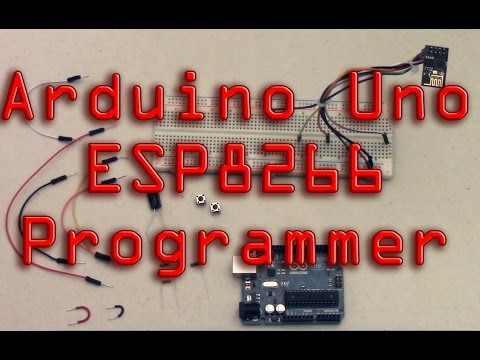
Shows how to flash or program an ESP8266 module using an Arduino Uno as the serial adapter when no FTDI cable is to hand.
Shows an ESP8266 kept fully off through its CH_PD pin and powered up by an external interrupt; suggested for battery sensors that should only wake on an event.