1 A simple guide to electronic components.
Big Clive's run through the common electronic components and what each does, suggested as a first stop before kits or Arduino projects.
Channel
26 recommended videos. Channel on YouTube
Big Clive's run through the common electronic components and what each does, suggested as a first stop before kits or Arduino projects.
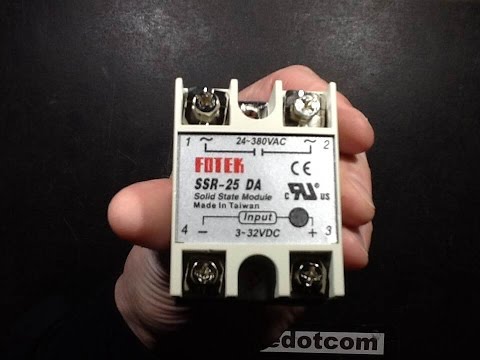
Big Clive opens a cheap eBay 25A solid state relay and finds a triac rated well below the label; cited when people ask what is inside these SSRs.
Big Clive demonstrates several ways to run an LED as a mains indicator on 120 V and 230 V, recommended when resistor-only circuits overheat or reverse voltage harms the LED.
Big Clive's warning about microwave oven transformers, shared to make clear how easily these projects injure or kill.
Regularly cited for sensible guidance on picking a budget temperature controlled soldering station and using it well.
A teardown of a dangerous cheap USB charger, cited whenever someone asks why bargain mains adapters are worth avoiding.
Big Clive tests whether over-discharged lithium cells are safe to recharge and how to check them for damage; cited in debates about deep discharge.
An explanation of the Dubai lamp story, used to show that ordinary LED bulbs are driven too hard with little cooling so they fail early.
A Big Clive video linked in discussions about fuse ratings and replacing multimeter fuses, though the thread gives few details about its content.
Big Clive's well known tutorial on building a Joule Thief, the simple circuit that boosts a small battery voltage, by the person who coined the name.
Big Clive explaining why LED bulbs glow or flicker faintly when switched off, linked whenever leakage current through a dimmer or switch puzzles someone.
Big Clive tears down a camping light whose capacitive dropper can leave its USB port at mains potential; cited as a vivid example of unsafe cheap design.
Big Clive's teardown of a mains LED lamp, cited to show how the bulb's driver and LED string are arranged and what voltages the LEDs run at.
A bigclive video on white LEDs that explains why some packages contain several junctions in series and raises doubts about the quality of cheap sourced parts.
Big Clive shows why a DC arc keeps burning where an AC arc dies at the zero crossing, explaining why DC breakers need magnets and arc chutes.
Big Clive's look at a cheap USB soldering iron, cited to show it manages small jobs while warning about power, tips and static.
Big Clive's blinking LED panel build, linked as the inspiration for people making their own flashing light displays and as a fun beginner project.
Cited as Big Clive's review of a budget digital Hakko 936 clone soldering station, valued because it accepts genuine Hakko tips.
Shared as a short warning about feeding power back into a host's USB port, which breaks the specification and can damage the computer.
Big Clive takes apart an arc lighter and draws out its circuit, cited for the schematic and estimated electrode voltage.
Big Clive examines some USB power supplies and finds poor isolation, used to show how a mains charger can fall short on safety.
BigClive opens a lithium jump starter power bank, estimating its peak current with improvised methods and showing cable and cell resistance effects in practice.
Linked as a good explainer on electronic ballasts for fluorescent style tubes, consulted by people puzzling over how ballast power ratings add up.
Big Clive explains how mains dimmers work and why dimming LED lamps is often troublesome, cited several times when the subject comes up.
Shared as a cautionary teardown showing cheap circuit breakers with no real trip mechanism inside, used to warn against unbranded safety parts.
Big Clive assembles an electronic kit with a seven-segment display and examines its board, linked as a reference when troubleshooting the same kit.